Introduction: A Global Leader in Green Innovation
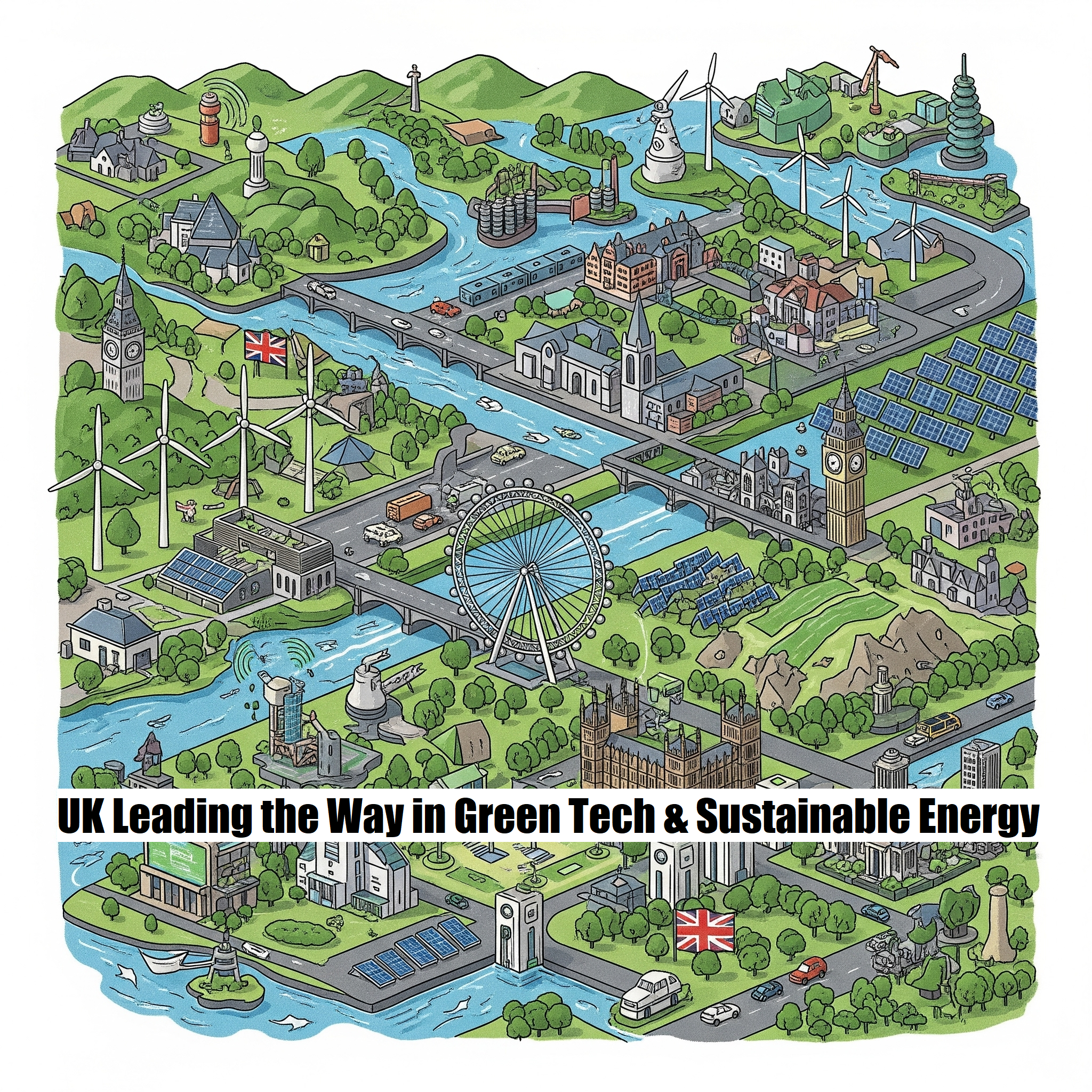
The United Kingdom is rapidly becoming a global frontrunner in green technology and sustainable energy. With firm government commitments, robust innovation from the private sector, and increasing public awareness, the UK is actively reshaping its energy infrastructure and environmental strategies. From offshore wind power to net-zero initiatives, the nation is delivering pioneering solutions to combat climate change and foster long-term environmental sustainability.
Government Commitment and Policy Framework
The UK government has enacted a comprehensive framework to support green energy growth, setting ambitious targets to reach net-zero carbon emissions by 2050. The cornerstone of this initiative is the Ten Point Plan for a Green Industrial Revolution, announced in 2020, which outlines strategic investments in areas such as:
-
Offshore wind
-
Hydrogen power
-
Nuclear energy
-
Carbon capture and storage
-
Green finance and innovation
In addition, the UK Emissions Trading Scheme (UK ETS) provides a robust carbon pricing mechanism that incentivizes low-emission business practices and accelerates the shift toward clean technologies.
Main Highlights of the UK’s Green Technology Movement
-
World’s largest offshore wind farm operational in UK waters (Dogger Bank)
-
Hydrogen-powered public transportation trials underway
-
Nationwide rollout of electric vehicle infrastructure
-
Bristol named one of Europe’s greenest cities
-
UK Green Investment Bank facilitating billions in climate-friendly projects
Offshore Wind Power: A Crown Jewel of UK’s Green Sector
The UK leads Europe in offshore wind generation, contributing to more than 25% of the total wind power in Europe. Massive projects such as the Hornsea and Dogger Bank wind farms are not only setting global records but also establishing the UK as the largest offshore wind market in the world.
According to the Department for Energy Security and Net Zero, over 40% of the UK’s electricity came from renewable sources in 2024, with offshore wind accounting for a significant share. The government plans to quadruple offshore wind capacity to 50GW by 2030, positioning the UK to export both electricity and expertise globally.
Hydrogen Energy: Fueling the Future
The UK Hydrogen Strategy is a landmark in clean energy transition. With heavy investments in green hydrogen (produced using renewable energy), the UK is setting up hydrogen refueling stations, funding pilot plants, and testing hydrogen-powered buses and trains in cities like Aberdeen and Birmingham.
Key initiatives include:
-
Hydrogen Bus Trials: Fleet deployments in London and Glasgow
-
Tees Valley Hydrogen Transport Hub: UK’s first national hydrogen transport ecosystem
-
Hydrogen blending into natural gas networks, starting with trials in Gateshead
This bold vision is aligned with the aim of producing 10GW of low-carbon hydrogen by 2030, enough to power industry, transport, and even homes.
Electric Vehicles and Charging Infrastructure Expansion
The UK has committed to ending the sale of petrol and diesel cars by 2035, advancing EV adoption across the country. As a result:
-
Over 55,000 public charging points are now active across the UK
-
London and Manchester are among Europe’s fastest-growing EV cities
-
Government incentives support the purchase of electric vehicles and the installation of home EV chargers
Leading automotive manufacturers like Jaguar Land Rover, Nissan, and MINI are investing heavily in UK-based EV production plants, reinforcing the country’s role in clean mobility.
Solar Power and Residential Energy Solutions
While offshore wind dominates the utility-scale renewables landscape, solar energy is transforming domestic consumption. Thanks to subsidies like the Smart Export Guarantee (SEG), homeowners are incentivized to install solar panels and sell excess energy back to the grid.
Other innovations include:
-
Solar-integrated roofing systems
-
Battery storage solutions for homes
-
Energy-efficient heat pumps replacing gas boilers
By 2025, it’s projected that one in every five UK homes will generate some form of renewable energy, significantly reducing national carbon emissions.
Carbon Capture and Green Innovation Hubs
Carbon Capture, Utilization, and Storage (CCUS) is another key focus area, especially in industrial regions like Humber and Merseyside. The UK government has pledged over £20 billion in CCUS investment, enabling:
-
Capture of CO₂ from industrial plants
-
Underground storage in depleted oil and gas reservoirs
-
Creation of thousands of green collar jobs
Additionally, innovation hubs in Cambridge, Oxford, and London are nurturing clean-tech startups through funding, mentorship, and partnerships with major energy firms like BP and Shell, which are now pivoting toward renewable technologies.
Green Finance and Sustainable Investment
Through the UK Green Finance Strategy, financial institutions are increasingly supporting ESG-aligned investments. The London Stock Exchange has emerged as a hotspot for green bonds and sustainable infrastructure funds, drawing billions in climate-focused capital.
The establishment of the UK Infrastructure Bank further empowers local governments and private enterprises to collaborate on:
-
Low-carbon transport
-
Sustainable housing
-
Energy storage systems
This ensures the green transition is not only environmentally responsible, but also economically viable.
Conclusion: A Blueprint for Global Sustainability
The UK’s aggressive, multi-pronged approach to green technology is proving that economic growth and environmental stewardship can go hand in hand. As the world faces mounting climate challenges, the UK’s commitment to sustainable energy provides a blueprint for other nations to follow.
From wind farms to hydrogen buses, and from solar-powered homes to smart green cities, the UK is not just participating in the green revolution—it is leading it.