Introduction:
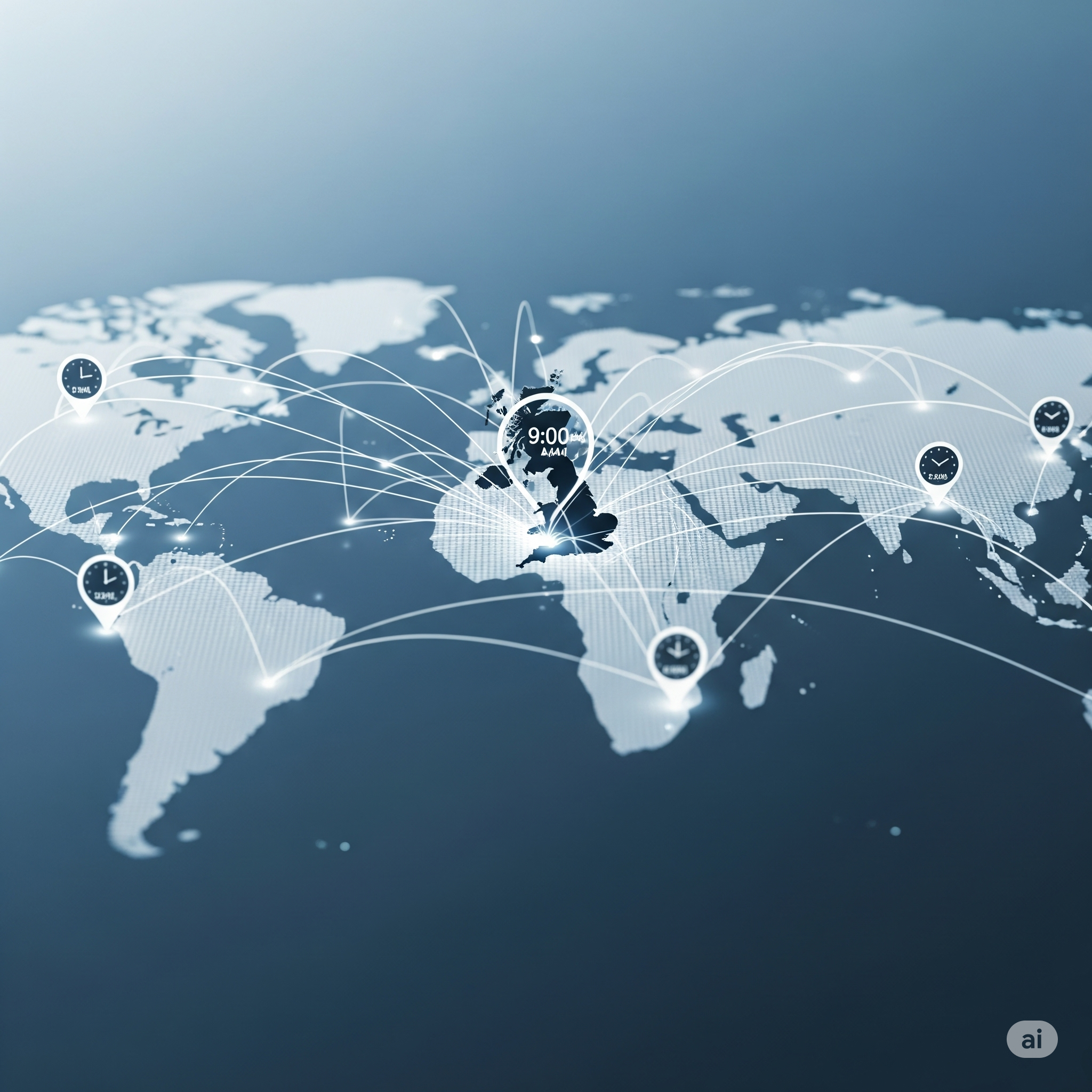
The United Kingdom plays a central role in global trade, finance, and business services. Its time zone is strategically positioned between Asia and the Americas, making it a crucial hub for cross-border meetings. For companies operating across different regions, understanding UK time is not only practical but also essential for building trust, avoiding delays, and ensuring smooth collaboration.
Understanding UK Time Zones: GMT and British Summer Time
The UK follows Greenwich Mean Time (GMT) in winter and switches to British Summer Time (BST), one hour ahead of GMT, from late March to late October. This seasonal change can create confusion for international teams if not managed carefully. Businesses that operate globally must track both GMT and BST to avoid misaligned schedules.
The Challenge of Time Differences in International Meetings
Time differences remain one of the biggest challenges for cross-border meetings. UK-based professionals often need to coordinate with:
-
Morning schedules in Asia, where the workday begins while the UK is still asleep.
-
Afternoon schedules in Europe, which overlap smoothly with UK time.
-
Evening schedules in the United States, where meetings often take place after UK working hours.
Balancing these differences requires flexibility, strong planning, and cultural awareness.
Department for Digital, Culture, Media & Sport
The UK’s success in the global events industry is no coincidence. The Department for Digital, Culture, Media & Sport (DCMS) has been central in driving policies that strengthen Britain’s reputation as a world-class host for international business gatherings. With leadership from figures such as Rebecca Pow, Minister for Arts, Heritage and Tourism, the government has laid a strong foundation to keep the UK competitive in a highly demanding global market.
The UK as a World-Class Business Events Destination
From London to Belfast, and from Glasgow to Newport, the UK is home to a wide network of world-renowned convention centres. Venues such as the National Exhibition Centre (Birmingham), the International Convention Centre (Belfast), the Scottish Event Campus (Glasgow), and the International Convention Centre (Newport) illustrate why the UK is considered an international hotspot for global conferences and exhibitions.
But beyond modern facilities, what makes Britain stand out is its heritage-rich character, blending tradition with innovation.
Heritage Venues and Luxury Hotels
The UK offers something unique that many competitors cannot – heritage venues and luxury hotels that are both historic and world-class. Whether it’s a centuries-old castle turned into a meeting space or luxury hotels providing top-tier services, Britain ensures every event is memorable and culturally enriched. This balance of modern convenience with traditional charm creates an unmatched appeal for international delegates.
Economic and Social Benefits of Business Events
Business events are more than just conferences – they are powerful economic drivers. In 2018 alone, business visitors made up nearly a quarter of all international visits, totaling 8.4 million arrivals, with delegates spending £4.5 billion while in the UK.
📌 Key Point: Almost half of these visitors later returned as leisure tourists, often bringing family and friends – a ripple effect that strengthens the wider tourism economy.
This dual impact of economic revenue and social exchange makes business events a vital pillar of Britain’s tourism and trade strategy.
Business Visitors’ Contribution to Tourism
Business events don’t end when the conference does. Delegates often return to explore Britain’s culture, shopping, and leisure attractions. This trend has boosted visitor numbers to historical sites, museums, theatres, and hospitality businesses across the country. Essentially, a single business trip often leads to long-term tourism growth.
The Role of the Events Industry Board
The Events Industry Board (EIB), created in 2015, plays a pivotal role in shaping the government’s business events agenda. Acting as a bridge between the government and the private sector, the board provides guidance on strategies to win new bids, attract global conferences, and grow delegate numbers.
The EIB also works closely with VisitBritain, which manages the GREAT Business Events Growth Programme – offering financial support to UK destinations competing in the global marketplace.
Collaboration with Devolved Administrations
Business events are not just concentrated in London. Thanks to collaboration with devolved administrations in Scotland, Wales, and Northern Ireland, the UK has built a balanced and inclusive events sector. Each region offers unique venues, cultural experiences, and business advantages, ensuring that the UK remains attractive to international event organisers seeking diversity and accessibility.
Looking Ahead – A Post-Brexit Opportunity
As the UK redefines its global role outside the European Union, there is a renewed emphasis on strengthening international ties through business events. The government’s International Business Events Action Plan highlights clear goals:
-
Attract more global conferences
-
Retain existing international events
-
Increase delegate spending
-
Promote trade, exports, and investment
By creating a coordinated, cross-government strategy, the UK ensures it stays ahead of competitors while remaining open for business.
Conclusion
The UK is not just a venue; it is an experience. With its world-class facilities, rich heritage, strong government backing, and coordinated industry partnerships, Britain continues to be a global leader in hosting international business events.