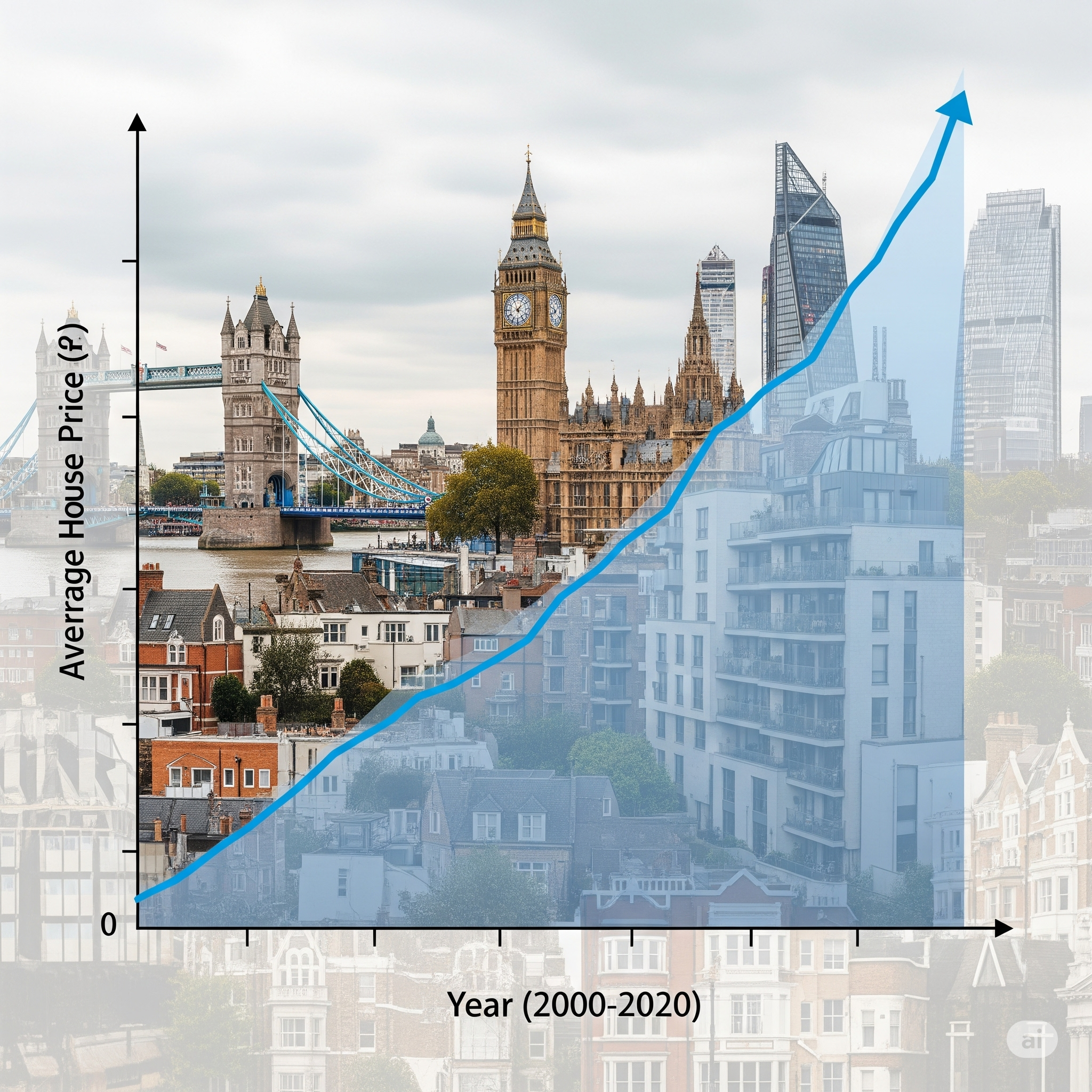
London’s housing market has always been a talking point in the UK property sector a blend of historic architecture, global demand, and constant economic changes. In 2025, London remains the most expensive region for homebuyers, with prices staying far above the UK national average.
While the market has experienced short-term fluctuations, long-term demand for property in the capital shows resilience, especially in outer boroughs where affordability and space attract buyers.
This article breaks down the average house price in London for 2025, explains trends by property type, compares inner and outer borough prices, and outlines what may happen for the rest of the year.
Importance of Average House Price in London 2025:
Knowing the average house price in London for 2025 is important for homebuyers, sellers, investors, and policymakers because it provides a clear picture of the market’s current condition and future direction. London’s property sector is one of the most influential in the UK and globally, and keeping track of price trends helps people make informed financial decisions.
For buyers, understanding that the average home costs between £540,000 and £570,000 in mid-2025 gives a realistic idea of affordability and the borrowing needed to secure a property. Sellers can use the same figures to set competitive prices based on property type, such as over £1.19 million for detached houses or around £449,000 for flats.
Tracking changes such as the 2.2% annual growth in May 2025 and the 1.4% monthly drop from April to May reveals whether the market is heating up or cooling down. This insight helps identify the best time to buy or sell.

Main Points of Average House Price in London 2025:
-
London remains the most expensive region for homebuyers in the UK in 2025.
-
Long-term demand stays strong, especially in outer boroughs with more affordability and space.
-
Average London house price in May 2025: £566,000.
-
Annual price growth in May 2025: +2.2%.
-
Monthly change from April to May 2025: -1.4%.
-
April 2025 average price: £567,000.
-
Detached house average price: £1.19 million+.
-
Terraced house average price: £638,000.
-
Flat/maisonette average price: £449,000.
-
Halifax June 2025 average price estimate: £540,048.
-
Detached homes have the highest prices due to low supply and high demand among wealthy buyers.
-
Flats are the most affordable property type in London but still above UK regional averages.
-
Inner London prices in some boroughs (e.g., Westminster, Kensington & Chelsea) declined by about 3% in early 2025.
-
Outer London boroughs like Barking & Dagenham, Bexley, and Croydon saw growth up to 4.4% year-on-year.
-
Mortgage rate reductions in early 2025 encouraged more buyers to enter the market.
-
Steady wage growth slightly improved affordability, despite inflation pressures.
-
A housing shortage, especially for family-sized homes, continues to support prices.
-
Government buyer support schemes (shared ownership, stamp duty incentives) have helped maintain demand.
-
Outlook for the rest of 2025: modest growth, with no sharp price falls expected.
-
Market trends depend on mortgage affordability, economic stability, and migration to outer boroughs.
-
As of mid-2025, London’s average price range is £540,000–£570,000 depending on the source.
-
Inner London shows slower growth or slight declines, while outer London sees steady price rises.
-
London’s annual house price growth was 2.2% in May 2025.
-
Detached homes cost over £1.1 million on average, while flats average under £500,000.
-
A slight monthly drop of around 1–1.4% occurred between April and May 2025.
-
Halifax data shows a June 2025 average of about £540,048.
-
Outer London boroughs are generally rising faster than inner boroughs.

Official 2025 Price Snapshot
According to the UK House Price Index (May 2025 data):
-
Average London house price: £566,000
-
Annual change: +2.2% compared to May 2024
-
Monthly change: -1.4% compared to April 2025
In April 2025, the official average was slightly higher at £567,000, with detached houses averaging over £1.19 million, terraced homes around £638,000, and flats at £449,000.
More recent Halifax lender data for June 2025 placed the London average at around £540,048, reflecting lender-specific calculations and seasonal variations.
Property Type Breakdown
London’s property market is diverse, and average prices differ widely depending on property type:
| Property Type | Average Price (April–May 2025) |
|---|---|
| Detached House | £1.19 million+ |
| Semi-Detached | £758,000–£770,000 |
| Terraced House | £638,000 |
| Flat/Maisonette | £449,000 |
Detached homes command the highest prices due to limited supply and desirability among high-income buyers. Flats remain the most affordable option, although “affordable” in London still means prices well above most UK regions.
Inner vs. Outer London Prices
One of the defining features of London’s housing market in 2025 is the price gap between inner and outer boroughs.
-
Inner London: Prices in some central boroughs, such as Westminster and Kensington & Chelsea, saw mild declines around 3% in early 2025 partly due to fewer overseas buyers and higher competition from outer boroughs.
-
Outer London: Boroughs like Barking & Dagenham, Bexley, and Croydon recorded stronger growth, with some areas seeing rises of up to 4.4% year-on-year. Larger homes, better transport connections, and relative affordability keep these areas in demand.
Why Prices Shifted in 2025?
Several factors influenced London’s housing market this year:
-
Mortgage Rates – While interest rates remain higher than pre-2022 levels, slight reductions in early 2025 have encouraged more buyers to return.
-
Economic Conditions – Steady wage growth has improved affordability slightly, though inflation still pressures household budgets.
-
Supply and Demand – London continues to face a housing shortage, especially for family-sized homes, which supports prices.
-
Government Schemes – Initiatives to help first-time buyers, including shared ownership and stamp duty incentives, have had a moderate effect in supporting demand.
Market Outlook for the Rest of 2025
Property experts suggest London’s house prices may see modest growth through the second half of the year. The capital is expected to avoid any sharp declines, but gains will likely remain in the low single digits.
The market will be shaped by:
-
Mortgage affordability – Further small reductions in borrowing costs could stimulate demand.
-
Economic stability – Continued wage growth could offset cost-of-living pressures.
-
Regional migration – Buyers priced out of central London will continue moving to outer boroughs, supporting prices there.

Comparison of Average House Price in London
Comparison of showing the Average House Price in London (2025) against other relevant UK cities and nearby areas, using the most recent 2025 data from reliable sources.
| Location / Area | Average House Price (2025) | Annual Change (%) | Monthly Change (%) | Notes / Market Trend |
|---|---|---|---|---|
| London (Overall) | £566,000 | +2.2% | -1.4% | Most expensive UK city; strong demand in outer boroughs. |
| London (Halifax Data) | £540,048 | +1.9% | N/A | Lender-based data; slightly lower than official HPI. |
| Inner London | £715,000+ | -0.8% | -1.1% | Price drops in central boroughs like Westminster & Kensington. |
| Outer London | £495,000 | +4.4% | +0.5% | Growth led by Barking & Dagenham, Bexley, Croydon. |
| Manchester | £239,000 | +3.1% | +0.2% | Strong growth from first-time buyers and investors. |
| Birmingham | £251,000 | +2.7% | +0.1% | Steady growth due to regeneration projects. |
| Bristol | £345,000 | +1.9% | -0.3% | Slower growth due to affordability limits. |
| Liverpool | £187,000 | +4.6% | +0.4% | One of the fastest-growing northern markets. |
| Leeds | £236,000 | +2.8% | +0.1% | Strong rental and buy-to-let demand. |
| UK National Average | £286,000 | +1.5% | -0.2% | London remains double the national average. |
Conclusion
As of mid-2025, the average London house price ranges between £540,000 and £570,000, depending on the source and month of reporting. Detached properties remain in the seven-figure range, while flats are generally below £500,000.
The market is showing a split: inner London sees slower growth or slight declines, while outer London benefits from steady demand. For the rest of 2025, gradual growth is the most likely scenario with London’s position as the UK’s most expensive region unlikely to change.