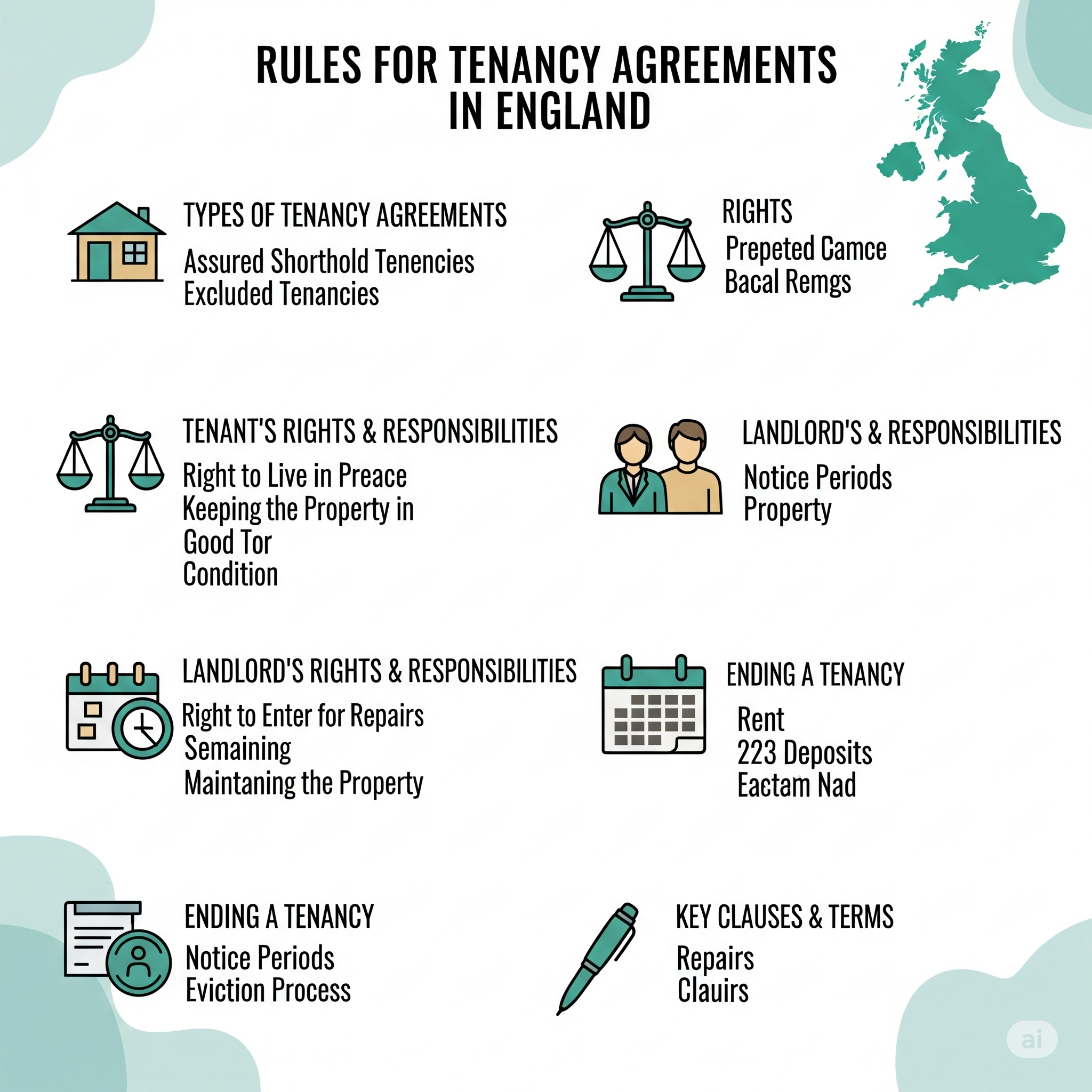
A tenancy agreement is a legally binding contract between a landlord and a tenant that sets out the rights and responsibilities of both parties. In England, these agreements must follow specific legal rules to ensure fairness, transparency, and protection for both sides. Understanding these rules is essential for avoiding disputes and ensuring the tenancy runs smoothly.

Importance of the Rules for Tenancy Agreements in England
The rules for tenancy agreements in England play a vital role in protecting both landlords and tenants. They ensure that rental arrangements are fair, transparent, and legally secure, reducing the risk of misunderstandings or disputes. By setting clear terms for rent, maintenance, and responsibilities, these rules create a balanced relationship where each party understands their rights and obligations.
Another important aspect is the protection of tenants’ deposits through government-approved schemes. This safeguard ensures that tenants can recover their money at the end of the tenancy if they meet their contractual obligations, while also giving landlords a formal process for claiming any valid deductions. The requirement to provide essential documents, such as the “How to Rent” guide, Energy Performance Certificate, and Gas Safety Certificate, further strengthens tenant protection and ensures the property meets legal safety standards.
For landlords, following these rules helps avoid legal complications and costly penalties. It also allows them to maintain professional rental practices that build trust with tenants and encourage longer, more stable tenancies. In the long run, the proper application of tenancy rules benefits both sides, creating a rental environment that is legally compliant, safe, and respectful for everyone involved.
What is a Tenancy Agreement?
A tenancy agreement is the written or sometimes verbal arrangement that outlines the terms under which a tenant rents a property from a landlord. While verbal agreements can be legally valid, having a written contract is strongly recommended to avoid misunderstandings.
Most private rentals in England operate under an Assured Shorthold Tenancy (AST), which has particular legal requirements set by the UK government.
Main points of the Rules for Tenancy Agreements in England:
-
A tenancy agreement is a legal contract between a landlord and tenant outlining rights and responsibilities.
-
In England, tenancy agreements must follow legal rules to ensure fairness, transparency, and protection.
-
Rules prevent disputes and create balanced landlord–tenant relationships.
-
Tenants’ deposits must be protected in a government-approved scheme within 30 days.
-
Essential documents like the “How to Rent” guide, EPC, and Gas Safety Certificate must be provided.
-
Written agreements are recommended, though verbal ones can be valid.
-
Most private rentals in England use an Assured Shorthold Tenancy (AST).
-
Agreements must state rent amount, payment dates, deposit details, tenancy length, and renewal terms.
-
Tenants have rights to safe housing, timely repairs, proper notice before entry, and deposit return.
-
Landlords have rights to rent payment, property care, and reclaiming property legally.
-
ASTs commonly last six or twelve months, then may renew or become periodic tenancies.
-
Landlords must give at least two months’ notice via Section 21 or other legal grounds.
-
Tenants usually give one month’s written notice to leave.
-
Rules protect both sides, maintain legal compliance, and build trust.
-
Disadvantages include complexity, strict compliance requirements, possible fines, delays in deposit access, time-consuming termination, reduced flexibility, and potential imbalance.
-
In Scotland, tenancy agreements follow Private Residential Tenancy (PRT) rules with no fixed term, stronger eviction protections, and different notice periods.
-
England offers more landlord flexibility through Section 21 no-fault evictions compared to Scotland.
-
Following the rules reduces disputes, ensures legal protection, and supports stable tenancies.
Main Points of the Rules:
-
A tenancy agreement is a legal contract between a landlord and tenant setting out rights and responsibilities.
-
Most private rentals in England use an Assured Shorthold Tenancy (AST) under UK law.
-
Written agreements are recommended, though verbal ones can be valid.
-
Agreement must state rent amount, payment dates, and deposit details.
-
Deposit must be protected in a government-approved scheme within 30 days.
-
Tenancy length and renewal terms must be clearly stated.
-
Rights and responsibilities of both parties must be listed.
-
Landlord must provide “How to Rent” guide, EPC, and Gas Safety Certificate if applicable.
-
Tenants have rights to safe housing, timely repairs, proper entry notice, and deposit return.
-
Landlords have rights to receive rent, expect property care, and reclaim property legally.
-
Most ASTs last six or twelve months, then renew or move to a monthly periodic tenancy.
-
Landlords must give at least two months’ notice to end tenancy via Section 21 or legal grounds.
-
Tenants usually give one month’s written notice to leave.
-
Following tenancy rules ensures fairness, prevents disputes, and protects both sides.
Rights of Tenants and Landlords
Tenant Rights:
-
To live in a safe and well-maintained property.
-
To have repairs carried out in a timely manner.
-
To receive proper notice before the landlord enters the property.
-
To have their deposit returned at the end of the tenancy if there is no valid reason for deductions.
Landlord Rights:
-
To receive rent on time as per the agreement.
-
To expect the tenant to take care of the property.
-
To reclaim the property at the end of the tenancy or through legal eviction procedures if necessary.
Duration and Renewal
In England, most AST agreements last for six or twelve months. After this period, they can be renewed, or the tenancy may roll into a “periodic tenancy” on a month-to-month basis. The terms of renewal should be clearly stated in the original agreement.
Termination Rules
Ending a tenancy must follow strict legal processes:
-
Landlords must give at least two months’ notice under a Section 21 notice (no-fault eviction) or a different notice type if there is a breach of tenancy.
-
Tenants usually must give one month’s written notice if they wish to leave at the end or during a periodic tenancy.
Disadvantages of Tenancy Agreement Rules
-
Can be complex for first-time landlords or tenants to fully understand.
-
Requires strict compliance with multiple legal requirements.
-
Failure to follow rules can lead to fines or legal disputes.
-
Deposit protection schemes may delay immediate access to funds for landlords.
-
Legal termination processes can be time-consuming.
-
Written agreements may limit flexibility compared to informal arrangements.
-
Certain rules may favour one party more, leading to perceived imbalance.
Comparison between Rules for Tenancy Agreements in England and Rules for Tenancy Agreements in Scotland
| Aspect | England (Assured Shorthold Tenancy – AST) | Scotland (Private Residential Tenancy – PRT) |
|---|---|---|
| Main Tenancy Type | Assured Shorthold Tenancy (AST) | Private Residential Tenancy (PRT) |
| Fixed-Term | Usually 6 or 12 months, then can become periodic | No fixed term; continues until tenant chooses to leave or landlord ends tenancy legally |
| Notice from Landlord | Minimum 2 months’ notice via Section 21 (no-fault) or other legal grounds | Must give 28–84 days’ notice depending on length of tenancy and reason |
| Notice from Tenant | Usually 1 month’s written notice | Must give at least 28 days’ written notice |
| Deposit Protection | Mandatory protection in a government-approved scheme within 30 days | Mandatory protection in a government-approved scheme within 30 working days |
| Required Documents | “How to Rent” guide, Energy Performance Certificate (EPC), Gas Safety Certificate | EPC, Gas Safety Certificate, and written tenancy terms |
| Eviction Grounds | Section 21 (no-fault) or Section 8 (fault-based) | Eviction allowed only on specific legal grounds (e.g., rent arrears, selling property) |
| Renewal Terms | Can be renewed or roll into monthly periodic tenancy | No renewal needed; tenancy continues automatically |
| Tenant Rights | Safe housing, timely repairs, proper entry notice, return of deposit if no valid deductions | Similar rights, but stronger eviction protections |
| Flexibility for Landlord | More flexible due to Section 21 no-fault evictions | Less flexible; must prove legal grounds for eviction |
Why Following the Rules Matters?
A tenancy agreement that complies with English law protects both the landlord and the tenant. It reduces the risk of disputes, ensures legal security, and sets clear expectations for rent, maintenance, and responsibilities.
By following these rules, landlords can avoid costly legal issues, and tenants can enjoy a stable and secure rental experience.