
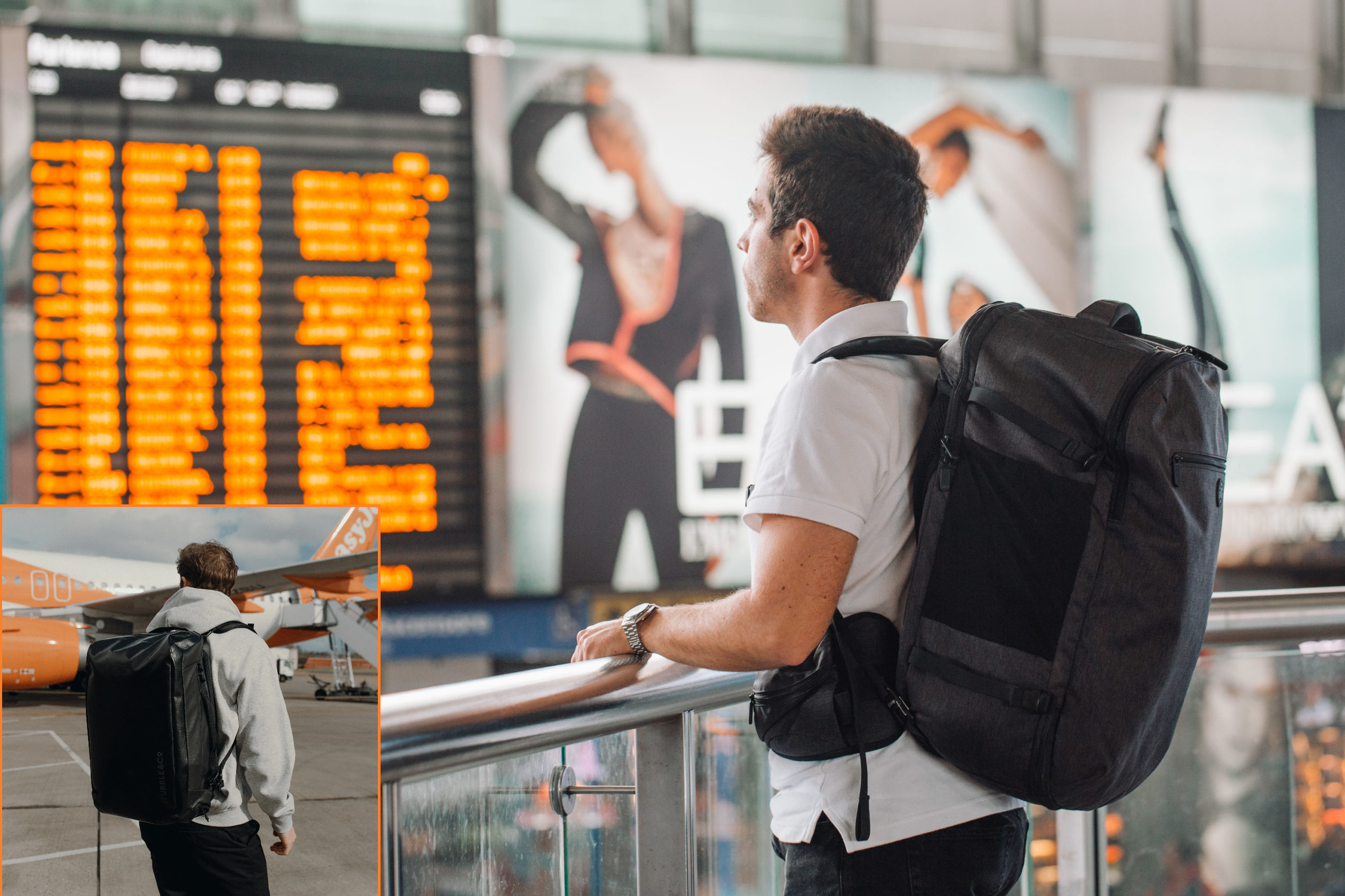
Backpacks are one of the most convenient luggage options for air travel. In the UK, most airlines allow them as either a carry-on bag or a personal item, provided they meet specific size and weight requirements. The challenge for passengers often lies in understanding the difference between the two categories, and in knowing what can and cannot be packed inside.
This comprehensive guide breaks down the rules for popular UK airlines such as British Airways, EasyJet, and TUI, covering size limits, weight allowances, and essential packing tips to avoid delays or extra fees.
Main Points of This Guide:
- Most UK airlines accept backpacks as either a carry-on bag or a personal item if they meet the airline’s rules.
- Size and weight restrictions differ depending on the airline.
- If a backpack exceeds the cabin allowance, it can be checked in as hold luggage.
- Handles, straps, and wheels are included in the official size measurements.
- British Airways, EasyJet, and TUI each publish their own size and weight limits.
- Cabin bag weight limits generally range between 10kg and 15kg.
- Checking the airline’s official website before travelling can help avoid unexpected charges.
- Items banned or restricted in carry-on bags must not be packed in a backpack.
Backpack as a Carry-On in the UK
For UK flights, a backpack can usually be classed as one of two things:
-
Personal Item – A smaller bag that fits under the seat in front of you.
-
Cabin Bag – A larger bag stored in the overhead locker.
If your backpack is small enough to fit under the seat, it’s considered a personal item and is typically included for free with your ticket. Larger backpacks that need to go overhead are counted as cabin bags, and in some cases, budget airlines may require you to pay extra for them.
Can You Use a Backpack as Checked Luggage?
Yes, you can use a backpack as checked luggage, provided it meets the airline’s hold baggage rules. For checked baggage, size limits are less strict than for carry-ons, but weight restrictions still apply. When checking in a backpack, it should be durable enough to withstand handling and conveyer belts. Using a protective cover or wrapping it at the airport can help avoid damage.
What Size Backpack Qualifies as a Carry-On in the UK?
While dimensions vary by airline, here are the common restrictions:
Personal Item (Small Backpack or Handbag)
-
British Airways: Up to 40 x 30 x 15 cm (16 x 12 x 6 in)
-
EasyJet: Up to 45 x 36 x 20 cm (18 x 14 x 8 in)
-
TUI: Up to 40 x 30 x 20 cm (16 x 12 x 8 in)
-
Other UK airlines: Similar size limits apply, ensuring the bag fits under the seat.
Cabin Bag (Larger Backpack or Trolley Case)
-
British Airways: Up to 56 x 45 x 25 cm (22 x 18 x 10 in)
-
EasyJet: Up to 56 x 45 x 25 cm (22 x 18 x 10 in)
-
TUI: Up to 55 x 40 x 20 cm (22 x 16 x 8 in)
-
Other carriers: Must fit in the overhead locker without forcing.
Note: Measurements usually include any handles, straps, and wheels.
Weight Limits for Backpacks on UK Airlines
Weight allowances differ between airlines. While some budget carriers do not impose strict weight limits on personal items, cabin bags often have a cap between 10kg and 15kg. British Airways, for example, typically allows up to 23kg for cabin bags on some fare types, but lighter limits apply on others. Always verify before you travel.
What Not to Pack in Your Carry-On Backpack in the UK
Airport security in the UK follows strict rules regarding what passengers can bring in their hand luggage. Common prohibited or restricted items include:
-
Liquids over 100ml: All liquids, gels, creams, and aerosols must be in containers of 100ml or less, stored in a single, resealable 1-litre plastic bag.
-
Sharp items: Knives, scissors with blades over 6cm, razor blades, and similar objects.
-
Sporting equipment: Bats, golf clubs, and other items that could be used as weapons.
-
Tools: Any tool over 6cm in length.
-
Flammable substances: Fuel, lighter fluid, and some aerosol sprays.
-
Self-defence items: Pepper spray and stun guns are strictly banned.
Failing to follow these rules can lead to confiscation at security checkpoints or delays in boarding.
British Airways Backpack Weight Policy
British Airways has a clear structure for cabin baggage:
-
Personal Item: Must not exceed 40 x 30 x 15 cm.
- Cabin Bag: Must not exceed 56 x 45 x 25 cm, with a typical weight allowance of up to 23kg (depending on fare type).
If a passenger exceeds these limits, their backpack will be placed in the hold, and checked baggage fees may apply.
Tips to Avoid Backpack Issues When Flying in the UK
-
Measure and Weigh Before You Leave Home
Use a tape measure and luggage scale to confirm your backpack is within limits. -
Pack Heavier Items at the Bottom
This improves balance and makes carrying easier. -
Use Packing Cubes
They help keep your belongings organised and compact. -
Keep Essentials Accessible
Documents, medications, and electronics should be easy to reach for security checks. -
Check Airline Rules Before Every Flight
Policies can change, and different fare types within the same airline may have varying baggage rules.
Oversized or Overweight Backpacks
If your backpack exceeds your airline’s cabin size or weight limits, you will likely need to check it into the hold. This often comes with additional fees, especially on low-cost carriers. At the gate, oversized cabin bags are commonly tagged and placed in the aircraft’s cargo hold.
British Airways, for instance, will check any cabin bag that doesn’t meet their size limits. The fee varies depending on whether you pre-pay online or pay at the airport.
Final Word
A backpack can be one of the most versatile types of luggage for UK air travel, but only if you follow your airline’s rules. Knowing the difference between a personal item and a cabin bag, keeping within size and weight limits, and avoiding restricted items can help you breeze through the airport without extra charges.
Always double-check the specific baggage policy of your airline before flying it can save you both money and stress at the airport.