
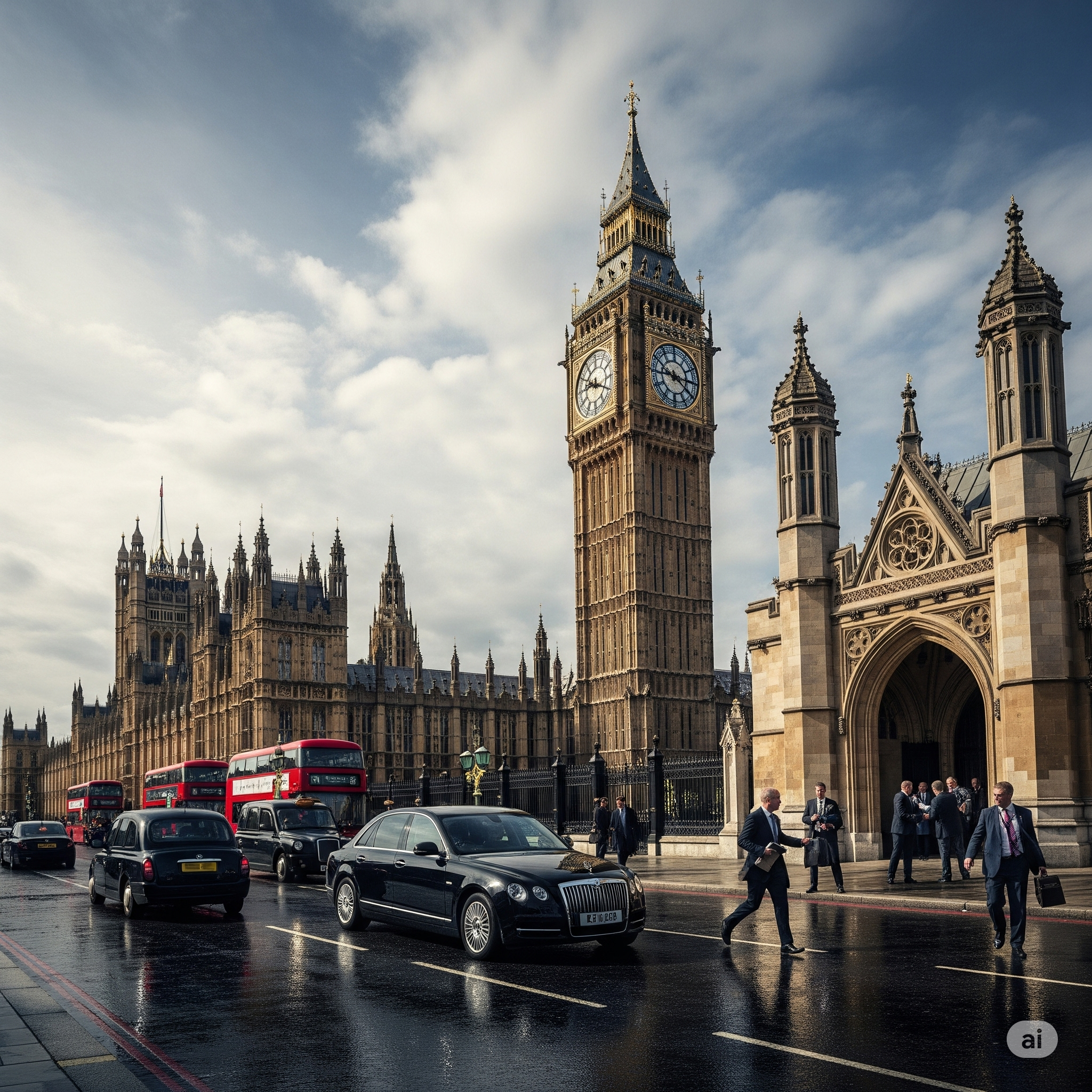
The United Kingdom operates under a parliamentary democracy, where governance is rooted in centuries of constitutional evolution. While the terms Parliament and Government are often used interchangeably, they refer to two distinct arms of power, each with specific roles within the UK’s political structure. This guide breaks down the difference between the UK Parliament and Government, explains how the British parliamentary system functions, outlines the roles of its members, and details the current structure and leadership of the UK Government in 2025.
UK Parliament vs. Government: What’s the Difference?
In the UK, Parliament and Government are interconnected but serve different purposes:
-
Parliament is the legislative body. It is responsible for debating, amending, and passing laws. It holds the Government accountable through questioning, debates, and select committees.
-
Government refers to the executive authority. Led by the Prime Minister and Cabinet, it runs public services, executes laws passed by Parliament, and sets national policy.
While Parliament includes both the House of Commons and the House of Lords, the Government is formed from members of the House of Commons who belong to the majority party (or coalition).
Key Differences at a Glance (Main Points):
Parliament makes laws; Government executes them.
Parliament includes both elected (Commons) and appointed (Lords) members; Government includes elected MPs from the ruling party.
The Prime Minister leads the Government; The Speaker oversees the Commons in Parliament.
Parliament holds Government accountable through votes, debates, and committees.
The UK Monarch is the ceremonial Head of State; real political power lies with Parliament and Government.
What Is the Parliamentary System of Government in the UK?
The UK’s system of governance is known as a parliamentary democracy combined with a constitutional monarchy. In this system, the Monarch (currently King Charles III) is the Head of State, while the Prime Minister is the Head of Government.
The parliamentary system works by:
Electing Members of Parliament (MPs) to the House of Commons through general elections.
The political party (or coalition) with the most seats forms the Government.
The Prime Minister is the leader of that party and is invited by the Monarch to form a Government.
Parliament must approve laws, budgets, and major policies.
This system ensures that the Government is directly accountable to Parliament, and by extension, to the public.
What Is the UK Government Called?
The UK Government is officially referred to as His Majesty’s Government, particularly in formal settings. However, in everyday usage, it’s simply called the UK Government. It operates under the authority of the Crown, led by the Prime Minister and supported by ministers heading various departments like Health, Education, and Defense.
What Is the Current Government of the UK? (As of 2025)
As of mid-2025, the current Government is led by Prime Minister [Insert Current PM Name], representing the [Insert Party, e.g., Conservative or Labour] Party, which secured a majority in the most recent general election.
The Government includes:
Prime Minister – Head of Government and leader of the Cabinet
Chancellor of the Exchequer – Manages the economy and public finances
Home Secretary – Oversees internal affairs, security, and immigration
Foreign Secretary – Handles international relations
Other ministers and junior ministers across various departments
This Cabinet is supported by a network of civil servants who implement the day-to-day functions of governance.
What Is the British System of Government?
The UK operates under a unitary parliamentary constitutional monarchy, meaning:
Unitary: Centralized government, although devolved powers are granted to Scotland, Wales, and Northern Ireland.
Parliamentary: The executive (Government) is drawn from and accountable to the legislature (Parliament).
Constitutional monarchy: The monarch’s powers are largely ceremonial, limited by law and tradition.
This system blends tradition with democratic representation, balancing royal heritage with modern politics.
UK Parliament Members
Parliament is made up of two chambers:
House of Commons:
Comprises 650 elected MPs (Members of Parliament).
Responsible for proposing and passing laws, debating national issues, and scrutinizing the Government.
Led by the Speaker of the House, who ensures fair debate.
House of Lords:
Unelected chamber with around 800 members including life peers, bishops, and hereditary peers.
Reviews, revises, and suggests amendments to legislation.
Cannot permanently block laws but can delay or revise them.
Who Is the Head of the Government in the UK?
The Prime Minister is the Head of Government in the UK. Appointed by the Monarch, the Prime Minister is typically the leader of the political party with the majority of seats in the House of Commons. The PM directs government policy, chairs Cabinet meetings, and represents the UK nationally and internationally.
What Type of Government Is the UK?
The UK is best described as a parliamentary democracy with a constitutional monarchy. Power is not concentrated in one person or office but is divided among:
The Monarch (symbolic head of state)
Parliament (makes the laws)
The Government (executes the laws)
This system ensures checks and balances, accountability, and representation of the public through elected officials.
What Is the UK Government?
The UK Government is the central executive authority of the country. Its main responsibilities include:
Drafting and implementing laws
Managing public services (health, education, transport)
Representing the UK in international affairs
Developing economic and foreign policies
Responding to emergencies and crises
Government operations are funded through taxation, approved by Parliament annually in the Budget.
Summary
Understanding the roles of the UK Parliament and Government is vital to grasp how political power is exercised and regulated in Britain. Parliament holds the legislative power, representing the voice of the people and providing checks on the Government. Meanwhile, the Government carries out the nation’s executive functions, under the leadership of the Prime Minister and Cabinet ministers.
Both bodies are crucial to maintaining a functioning, democratic society. While Parliament debates and shapes laws, the Government implements them and manages the country’s day-to-day affairs. The system is dynamic, with built-in accountability that ensures one branch does not overpower the other.
FAQs
Q: Is the Prime Minister part of Parliament or Government?
A: The Prime Minister is part of both. They are an elected MP (in Parliament) and lead the Government.
Q: Can Parliament remove the Prime Minister?
A: Indirectly, yes. If the Prime Minister loses a vote of no confidence in the House of Commons, they may be forced to resign.
Q: What is the role of the Monarch in UK politics?
A: The Monarch has a ceremonial role, formally appointing the Prime Minister, opening Parliament, and granting Royal Assent to laws.