Introduction:
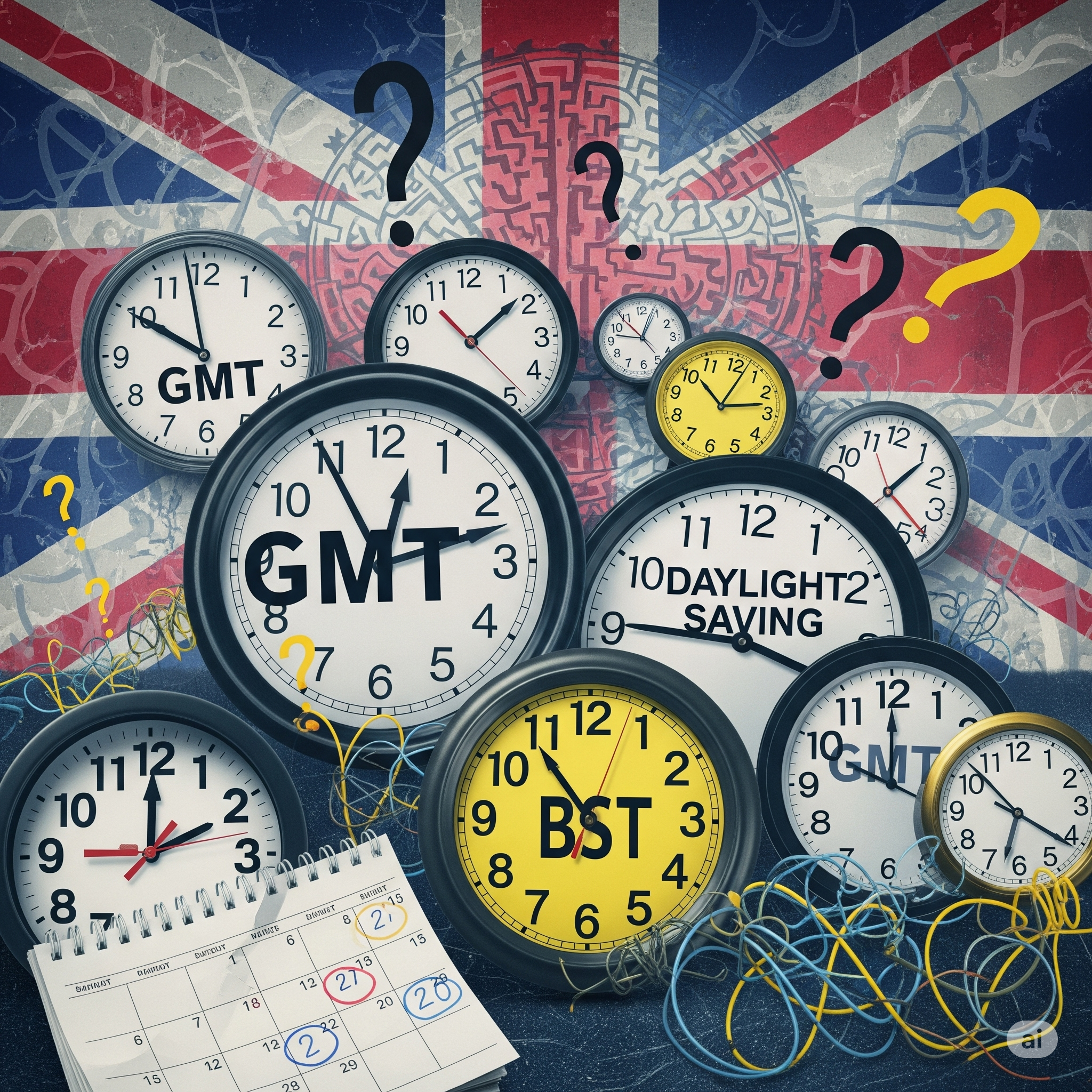
Time in the United Kingdom is not as straightforward as it seems. While many countries follow a single standard time throughout the year, the UK operates differently. Depending on the season, the country shifts between Greenwich Mean Time (GMT) and British Summer Time (BST). This switching often creates confusion, not just for locals but also for people around the world who depend on UK time for business, travel, or communication.
The UK is often referred to as being “on GMT,” but that is only true in the winter months. When summer arrives, the country shifts forward one hour to BST. This means the UK is not always on the same time standard throughout the year, which creates uncertainty for those outside the country.
For example, when the UK changes clocks in March and October, many other nations do not adjust at the same time—or do not follow daylight saving at all. This mismatch is what makes UK time feel complicated, especially in the digital age when businesses, events, and communications span across multiple continents.
What is the Global Impact of UK Time?
Because London has long been a global financial hub, its time system plays a key role in international markets, aviation, technology, and diplomacy. A small one-hour shift may not seem much, but it directly impacts trade timings, stock market schedules, and even broadcasting around the world.
In the 19th century, the Royal Observatory in Greenwich established Greenwich Mean Time (GMT). This became the world’s first universal time standard. Today, all global time zones are measured in relation to GMT (e.g., GMT+5, GMT-8). This system allows countries to coordinate efficiently, whether for business meetings or international events.
What is the role in International Business and Finance?
London is one of the largest financial centers in the world. Operating in GMT (and BST during summer), UK Time bridges trading hours between Asia in the morning and America in the afternoon. This overlap allows smooth transactions in global stock markets, currency exchanges, and banking operations. Businesses worldwide rely on UK Time to align their strategies.
How to Influence on Trade and Shipping Routes
Historically, British ships used GMT for navigation at sea, which helped build reliable global trade routes. Even today, shipping schedules, logistics companies, and international ports use GMT as a consistent reference point for planning deliveries and cargo movement.
Importance for Air Travel and Navigation
Airlines and airports worldwide rely on standardized time to avoid confusion. Flight schedules often use GMT to ensure accuracy across different time zones. This is particularly important for international travelers moving between continents.
What are impact on Communication and Digital Systems?
Digital technologies, internet servers, and global communication platforms also use GMT as a reference. From live news broadcasts to online video calls, UK Time helps maintain synchronization across regions. Without a unified reference like GMT, international communication would face constant errors.
Cultural and Historical Significance
Beyond business and technology, UK Time carries historical importance. The idea of “time zones” was born from the need to create order during the rise of the British railway system. This legacy continues, making UK Time not just a technical measure but also a cultural reference that shaped global modern life.
Meaning of GMT (Greenwich Mean Time)
Greenwich Mean Time is the time standard that originated from the Royal Observatory in Greenwich, London. Historically, GMT was the reference for global timekeeping, with the Prime Meridian (0° longitude) passing through Greenwich. Many countries used GMT as the baseline for their own local time zones. In simple terms, GMT represents the UK’s standard time during the winter months, when clocks are not adjusted forward or backward.
GMT was established to provide a single reference point for sailors and travelers, helping them calculate longitude and avoid navigation errors. Its zero-degree longitude line, known as the Prime Meridian, runs through Greenwich, making it the starting point for world time zones.
In modern times, GMT is still widely referenced in international schedules, aviation, broadcasting, and global coordination. While UTC (Coordinated Universal Time) is now more precise due to atomic measurements, GMT remains culturally and historically significant.
Why GMT in the UK Today?
In the United Kingdom, GMT is followed during the winter months, typically from late October to late March. The rest of the year, the UK shifts to British Summer Time (BST). This seasonal adjustment is where much of the confusion about “UK time” arises.

What is the Role of BST (British Summer Time)?
British Summer Time (BST) is the UK’s version of Daylight Saving Time. It begins in late March and ends in late October. During BST, clocks are moved one hour ahead of GMT. For example, when it is 12:00 noon GMT, it becomes 1:00 pm BST. This shift was introduced to make better use of daylight in the evenings and save energy. While useful, it adds another layer of complexity for those who rely on accurate UK time.
The idea of shifting clocks forward was first suggested in the early 20th century, mainly to conserve energy and allow people to make the most of natural daylight. It was officially adopted during World War I and has remained part of the UK’s system ever since.
Supporters argue that BST reduces energy consumption, boosts tourism, and encourages outdoor lifestyles. Longer evenings are considered beneficial for both the economy and social well-being.
What is Ongoing supports BST Debate?
Despite its advantages, not everyone supports BST. Some argue that changing the clocks disrupts sleep patterns, creates confusion in international business, and is less relevant in a modern world where energy usage depends more on technology than daylight. The debate about whether to keep or scrap BST continues, but for now, it remains a key part of the UK’s annual time cycle.
How Daylight Saving Works in the UK
Daylight Saving in the UK follows a simple rule:
-
Starts: Last Sunday of March (clocks move forward by 1 hour).
-
Ends: Last Sunday of October (clocks move back by 1 hour).
This system ensures longer daylight hours in summer but causes a noticeable shift twice a year. The practice began during World War I as a way to conserve fuel and has continued ever since, despite ongoing debates about its necessity.
Common Confusions Between GMT and BST
The biggest confusion arises because people often refer to “UK time” without specifying whether it is GMT or BST. For example:
-
International businesses may schedule a meeting in GMT, not realizing the UK is on BST during summer.
-
Travelers booking flights might face unexpected time differences.
-
Digital systems, such as email servers or software updates, sometimes display the wrong time zone.
This uncertainty explains why many people find UK time difficult to follow.
Why UK Time Affects the World?
The UK’s time system is not just a local matter—it affects the world in several ways:
-
International Trade: London is a major financial hub, and global markets depend on accurate UK time.
-
Technology Systems: Servers, websites, and apps often use GMT as a baseline, so seasonal changes in the UK affect global users.
-
Travel & Aviation: Airlines must carefully adjust schedules to align with BST and GMT shifts.
The UK’s role in world business and history makes its timekeeping system significant far beyond its borders.

What is the role of UK Time in Technology, Business, and Travel?
Many industries rely on UK time accuracy:
-
Technology: Software companies and cloud platforms often synchronize clocks with GMT.
-
Business: International companies working with the London Stock Exchange must track BST during summer.
-
Travel: Flight timetables, railway schedules, and shipping routes are all influenced by seasonal time changes in the UK.
Even small errors in time conversion can cause costly delays or miscommunication.
-
GMT is the UK’s standard time in winter.
-
BST adds one extra hour in summer.
-
Daylight Saving shifts occur in March and October.
-
Confusion arises because “UK time” can mean either GMT or BST.
-
The UK’s system impacts global trade, technology, and travel.
Tips for Avoiding UK Time Zone Mistakes
To prevent errors when dealing with UK time:
-
Always check whether the UK is on GMT or BST before scheduling.
-
Use online tools or world clocks to confirm current UK time.
-
When arranging international meetings, specify the exact time zone instead of simply saying “UK time.”
-
Rely on updated digital calendars that automatically adjust for Daylight Saving.
These simple practices can save time, prevent confusion, and improve international coordination.
Conclusion: Making Sense of UK Time
UK time may seem complicated, but it follows a clear pattern: GMT in winter and BST in summer. The difficulty lies in remembering when the shift happens and adjusting accordingly. Since the UK plays a vital role in global business, technology, and travel, understanding this system is essential. By keeping track of GMT and BST changes, both individuals and organizations can avoid costly mistakes and stay on schedule worldwide.