
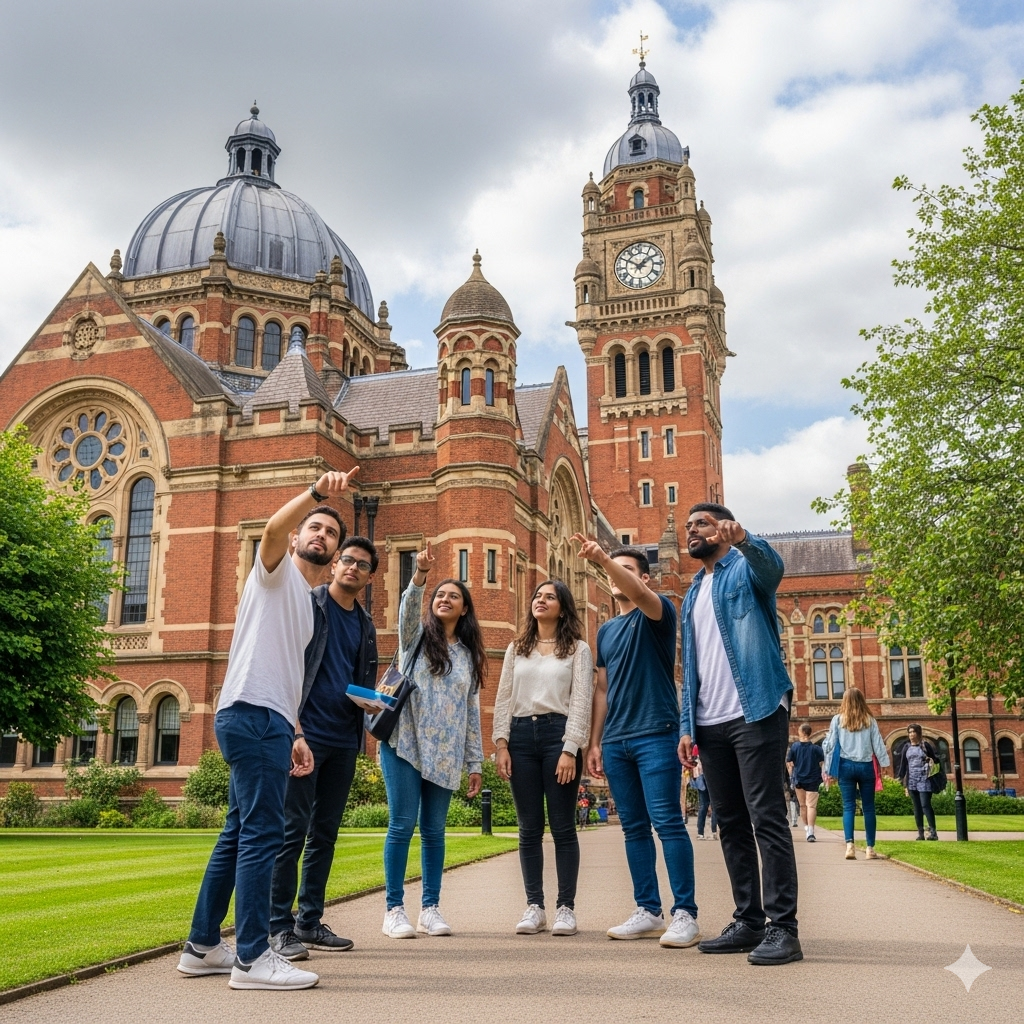
University of Birmingham is a top UK institution offering diverse undergraduate and postgraduate courses across business, law, science, engineering, arts, and social sciences. Students benefit from flexible study options, placements, and research-led teaching.
Postgraduate degrees, including master’s and PhDs, focus on advanced learning, innovation, and global career growth. International students are supported with visa guidance, language help, and a welcoming campus community.
Tuition fees vary by course and student status, but scholarships, bursaries, and part-time work opportunities make study more affordable. With strong rankings, modern facilities, and worldwide recognition, Birmingham provides an excellent environment for academic and professional success.
Postgraduate Courses
University of Birmingham offers a wide choice of postgraduate programs, including master’s and PhD degrees. These courses are designed for students who want to specialize further, gain advanced skills, or move into research and leadership roles. Subjects cover areas like business, law, engineering, science, health, and social studies. Many programs are flexible, with part-time and online options available.
University of Birmingham – Master’s and PhD Programmes with Fees (2025–26)
| Faculty / School | Master’s Programmes | PhD / Research Programmes | Typical Fees (per year unless noted) |
|---|---|---|---|
| Health & Medicine | MSc Advanced Clinical Practice, MSc Health Data Science, MSc Global Public Health, MSc Sports & Exercise Medicine, MBChB Medicine | PhD Medicine, PhD Health Data Science, PhD Public Health, PhD Medical Ethics, PhD Psychology, PhD Nursing | UK: £5,006 / International: £24,130–£50,360 (clinical programs higher) |
| Business School | MSc Management, MSc Accounting & Finance, MSc Marketing, MSc International Business | PhD in Management, PhD Economics, PhD Accounting & Finance | Master’s £24,130–£26,180 (depending on subject band). PhD UK: £5,006 / International: £24,130–£26,180 |
| Engineering & Physical Sciences | MSc Engineering Management, MSc Data Science, MSc Computer Science | PhD Engineering, PhD Physics, PhD Computer Science, PhD Materials Science | UK: £5,006 / International: £24,130–£30,370 |
| Law | LLM and other Master’s | PhD Law, MPhil in Law | UK: £5,006 / International: £24,130–£27,200 |
| Social Sciences | MSc International Development, MSc Public Policy, MSc Sociology | PhD Social Sciences, PhD Politics, PhD Economics | UK: £5,006 / International: £24,130–£26,180 |
| Science & Mathematics | MSc Data Analytics, MSc Statistics, MSc Mathematics | PhD Applied Mathematics, PhD Statistics, PhD Environmental Science | MSc £25,000–£26,500 (international). PhD UK: £5,006 / International: £24,130–£30,370 |
| Online Master’s (selected) | MSc Data Science (£25,000), MSc Cyber Security (£25,000), MSc Finance (£26,180), MSc Business Management (£25,500) | – | Total fee shown (entire programme) |
Postgraduate students benefit from research-led teaching, meaning they learn directly from experts in their fields. The university also has strong links with industry, giving students access to valuable networking and career opportunities. With excellent academic support, Birmingham is a strong choice for postgraduate study.
Undergraduate Courses
At University of Birmingham, undergraduate students can choose from a wide range of subjects including Accounting and Finance, Engineering, Law, Politics, Medicine, and the Arts. Flexible study options allow many students to combine subjects or take joint degrees.
| Subject Area | Courses |
|---|---|
| Accounting and Finance | – Financial Accounting – Managerial Accounting – Corporate Finance – Auditing – Taxation – Investment Analysis – International Finance – Financial Reporting – Risk Management |
| Engineering | – Civil Engineering – Mechanical Engineering – Electrical Engineering – Computer Systems – Aerospace Engineering – Biomedical Engineering – Robotics – Sustainable Engineering |
| Medicine & Health | – MBChB Medicine – Nursing – Midwifery – Global Public Health – Biomedical Science – Sports Science |
| Law & Politics | – LLB Law – Politics & International Relations – Criminology – Public Policy – Human Rights Law |
| Arts & Humanities | – History – English Literature – Philosophy – Modern Languages – Music – Drama – Creative Writing |
The university focuses on both academic depth and real-world learning, offering placements, internships, and study abroad opportunities. With its supportive collegiate system, students enjoy both excellent teaching and a close-knit community experience.
International Students
University of Birmingham is a top UK university that attracts students from over 150 countries. It offers a welcoming environment with tailored support, including visa help, English language programs, and dedicated international advisors.
Why University of Birmingham Is a Top-20 UK University?
| Category | University of Birmingham | Top 20 UK Benchmark | Why It Stands Out |
|---|---|---|---|
| Overall UK Rank | 14th (Guardian 2025), 13th (Times 2025) | Top 20 = 1st–20th | Consistently ranks in the UK top 20 |
| Global Ranking | 80th (QS 2024/25) | 100–200 | Among top Russell Group universities worldwide |
| Teaching Quality | TEF Gold | TEF Silver–Gold | Nationally recognized for outstanding teaching |
| Student Satisfaction | 88% teaching, 90% resources (NSS 2024/25) | 80–90% | Above-average satisfaction rates |
| Research (REF 2021) | 92% world-leading or excellent | 80–90% | High impact in Medicine, Engineering, Physics |
| Graduate Employability | Top 20 most-targeted by UK employers | Russell Group + Top 30 | Strong career prospects & ROI |
| Subject Strengths | Medicine – 6th, Engineering – 8th, multiple top-10s | 1–20 by subject | Strong across STEM, Arts & Social Sciences |
| Value for Money | Graduates earn ~£70k more than average | ROI varies | High long-term career value |
| Reputation | Leading Russell Group member | Mostly Russell Group | Globally respected, elite standing |
The campus is multicultural and safe, with modern facilities, student societies, and events that help newcomers feel at home. Studying at Birmingham gives international students the chance to earn a respected UK degree while gaining global experience and connections.
Fees and Funding
Tuition fees at Birmingham depend on the course, level of study, and whether you are a UK, EU, or international student. In addition to tuition, students need to plan for accommodation and living costs.
| Student Type / Region | Undergraduate Tuition (Annual) | Postgraduate Tuition (Annual) | Key Details |
|---|---|---|---|
| Home (England) | Up to £9,250 | £5,000–£15,000 | Undergraduate fees capped by government; postgraduate varies by subject |
| Home (Northern Ireland) | £4,750 (NI residents) or £9,250 (other UK students) | £5,000–£15,000 | Reduced rates for NI students; standard cap for others |
| Home (Scotland – “Young Students”) | Free tuition for eligible students | £5,000–£15,000 | Postgraduate courses are not free |
| Home (Wales) | Up to £9,250 | £5,000–£15,000 | Some bursaries available |
| International Students | £18,000–£40,000+ | £24,130–£50,360+ | Clinical and specialized programs cost more |
Points to Understand:
-
Annual Fees Are Mandatory: Every student studying at a UK university must pay tuition fees each year.
-
Different Rules by Region: England and Wales have similar fee caps. Northern Ireland offers reduced rates for locals. Scotland provides free tuition for many home students at undergraduate level.
-
Postgraduate Fees Are Flexible: Unlike undergraduate courses, postgraduate tuition is not capped and varies widely.
-
International Students Pay More: Fees for international undergraduates generally start around £18,000 per year and can rise above £40,000. Postgraduate fees range from £24,130 to more than £50,000.
To make study affordable, Birmingham provides scholarships, bursaries, and subject-specific awards. International students also have access to financial support options. The university’s career services help students find part-time work to ease expenses while building valuable work skills.
Postgraduate Study
Birmingham has a dynamic postgraduate community with students pursuing master’s and PhD programs across science, business, law, health, and the arts. Courses are research-driven, giving students opportunities to work on real projects with global impact.
Why University of Birmingham is Home to a Dynamic Postgraduate Community?
| Aspect | University of Birmingham (Postgraduate) | Typical UK University (Postgraduate) |
|---|---|---|
| National Ranking | Top 15 in UK across major league tables | Usually ranges between Top 20–50 |
| Research Quality | Over 90% of research rated “world-leading” or “internationally excellent” | National average about 80% |
| Subject Variety | Strong in Medicine, Engineering, Law, Business, Arts, Social Sciences | Often strong in one or two areas only |
| Employability | Among top 20 universities most targeted by UK employers | Many institutions not on employer target lists |
| Teaching Excellence | Gold award in TEF | Silver or Bronze for many UK universities |
| International Community | Students from 150+ countries, strong global networks | Less diverse at smaller institutions |
| Student Satisfaction | Above 88% | UK average ~82% |
| Campus Life | Collegiate system, modern facilities, active postgraduate societies | Standard facilities, fewer postgraduate-specific groups |
Postgraduates benefit from advanced facilities, expert supervision, and career-focused workshops. Whether aiming for specialization, academic research, or professional growth, Birmingham provides the resources and support to succeed at the highest level.
Entry Requirements
University of Birmingham entry requirements vary by course and level of study. Undergraduate applicants are usually expected to have strong A-levels or equivalent international qualifications. Postgraduate students typically need a relevant bachelor’s degree, while PhD applicants require a master’s or research background. International students must also meet English language standards such as IELTS or TOEFL scores.
List of Requirements:
-
Undergraduate: Strong A-levels or equivalent international qualifications.
-
Postgraduate (Master’s): A relevant bachelor’s degree with good academic standing.
-
PhD/Research Degrees: A master’s degree or proven research experience.
-
International Students: Proof of English language proficiency (IELTS, TOEFL, or accepted alternatives).
-
Additional Requirements: Some courses may require portfolios, interviews, or work experience.


What Rank Of University of Birmingham in UK?
University of Birmingham is consistently ranked among the Top 20 universities in the UK and is a prestigious Russell Group member. Recognized globally for excellence in both teaching and research, the university is based on a large, green campus in Edgbaston, Birmingham, combining modern facilities with rich academic tradition.
With advanced academic resources, dedicated student services, and a welcoming environment, Birmingham provides students with the tools they need to succeed both inside and outside the classroom.
University of Birmingham, based in Birmingham, England, is one of the UK’s leading universities, well-regarded for teaching, research, and student experience. The university combines academic excellence with a vibrant, green campus designed for student life. It is internationally recognized and consistently ranked among the UK’s top 20 universities.
Academic Staff at the University of Birmingham
Dr Emma Baker – Lecturer in Management Science
Professor David Cross – Professor of Engineering
Dr Sarah Evans – Senior Lecturer in Statistics
Dr Jonathan Hill – Lecturer in Computer Science
Professor Mark Johnson – Chair in Biomedical Engineering
Dr Lucy King – Lecturer in Health Sciences
Dr Daniel Lewis – Senior Lecturer in Psychology
Professor Helen Moore – Professor of Environmental Science
Dr Robert Nash – Lecturer in Law
Dr Angela Patel – Lecturer in Social Sciences
Professor Thomas Quinn – Professor of Economics
Dr Maria Roberts – Lecturer in Politics
Professor Ian Smith – Professor of Applied Mathematics
Dr Rebecca Taylor – Senior Lecturer in Finance
Dr Peter Walker – Lecturer in Philosophy
University of Birmingham Services or Facilities
On-Campus & Student Life
Pets Policy: Dogs and other pets are not permitted on university grounds. Assistance and working dogs are fully welcome.
Campus Features:
The Birmingham campus includes:
-
Multiple libraries and study areas
-
Sports centers and fitness facilities
-
Cafeterias, cafes, and restaurants
-
Student-run clubs and societies
-
Green open spaces and gardens
Accommodation at Birmingham
Accredited Options:
The university offers on-campus halls and recommends approved private student housing.
What to Pack?
Students should bring bedding, towels, crockery, cutlery, and essential electronics.
Academic & Student Support
Assessments and Resits: Students who fail an assessment may need to resit exams or coursework.
Student Portal & IT Support: Students can access online modules and IT support through the university portal.
Career Development: Birmingham provides career workshops, employer networking events, and the “Career Ready” initiative for skill development.
University of Birmingham Key Highlights:
-
Top 20 UK University with global recognition
-
Member of the Russell Group
-
Large green campus with modern facilities
-
Accredited student housing options
-
Career-focused workshops and networking
-
Strong academic support via portals and IT services
-
Clear assessment and resit policies


University of Birmingham Activities
1 – Pre-Arrival & Travel Information: Guidance sent before start date; Birmingham Airport is main access point.
2 – Packing & Clothing Tips: Bring waterproof jacket, layered clothing, and comfortable shoes.
3 – Visa, Insurance & Money Matters: Student Visa required; arrange personal insurance; budget for extra expenses.
4 – Safety & UK Laws: Keep valuables safe, avoid unlit areas at night; alcohol and tobacco restricted to 18+; no illicit drugs or weapons.
5 – Accommodation for Summer Schools: Single ensuite rooms with catering available; virtual tours provided.
6 – Cancellations & Refunds: Refunds available under specific university conditions.
Admission Process at University of Birmingham
-
Choose Your Program: Visit official course pages and review entry requirements.
-
Application Submission: Undergraduate via UCAS; postgraduate via university portal.
-
Supporting Documents: Academic transcripts, English proficiency, personal statement, references.
-
Offer & Acceptance: Conditional or unconditional offer; confirm place and arrange visa.
-
Visa & Pre-Arrival Support: Student Visa required for non-UK students; guidance and support provided.
Comparison of Admission Process
| Aspect | Undergraduate Admissions | Postgraduate Admissions |
|---|---|---|
| Application System | UCAS | University portal |
| Key Requirements | A-levels/IB or equivalent, English proficiency | Bachelor’s degree, English proficiency, references |
| Personal Statement | Required via UCAS | Required in application form |
| References | One academic referee | Two academic/professional references |
| Deadlines | January (UCAS main cycle) | Varies by program |
| Offer Type | Conditional or unconditional | Conditional or unconditional |
| Visa Guidance | Provided post-acceptance | Provided post-acceptance |
University of Birmingham – Key Highlights
-
Top 20 UK University for academic and student satisfaction
-
Recognized worldwide; Russell Group member
-
Large green campus with libraries, sports, and social spaces
-
Accredited housing options available
-
Career-focused support and networking initiatives
-
Strong academic support including online portals and resit policies
Student Life and Accommodation: Ensuite single rooms with catering options; bring bedding, towels, crockery, cutlery, and electronics.
Safety & Legal Information: Alcohol/tobacco 18+, no smoking in enclosed spaces, illegal to carry drugs or weapons, stay secure and avoid unlit areas at night.
Comparison of University of Birmingham vs. University of Manchester
| Feature | University of Birmingham | University of Manchester |
|---|---|---|
| QS World Ranking (2026) | #80 | #67 |
| Times Higher Education | #112 | #111 |
| Acceptance Rate | ~25% | ~60% |
| Undergraduate Programs | 90+ | 150+ |
| Postgraduate Programs | 120+ | 200+ |
| Doctoral Programs | 70+ | 100+ |
| Engineering Ranking | #25 | #18 |
| Medicine Ranking | #12 | #9 |
| Average Tuition (UG) | £23,500 | £22,750 |
| Average Tuition (PG) | £26,000 | £27,000 |
| Living Costs (Hostel + Meals per year) | ~£12,000 | ~£12,500 |
| Graduate Employability Rank | Top 20 UK | Top 15 UK |
| Campus Style | Large green campus | Urban split campus |
| Student-Faculty Ratio | Approx. 14:1 | Slightly higher |
| Special Strengths | Research-led teaching, career workshops, strong international community | Broad subject choice, strong in Medicine and Engineering |
Why Choose University of Birmingham?
Studying at Birmingham offers a combination of academic excellence, modern facilities, and a strong supportive community. From career development workshops to accredited housing and a large, green campus, Birmingham is consistently chosen by students seeking high-quality education and an enriching experience in Birmingham, England.